

Contact Information
+91 8595269126, +91 7042231814 info@marketinggo.in

Address
26B Third Floor, Desh Bandhu Gupta Rd, Block 26 B, Dev Nagar, Anand Parbat, Karol Bagh, New Delhi, Delhi 110005

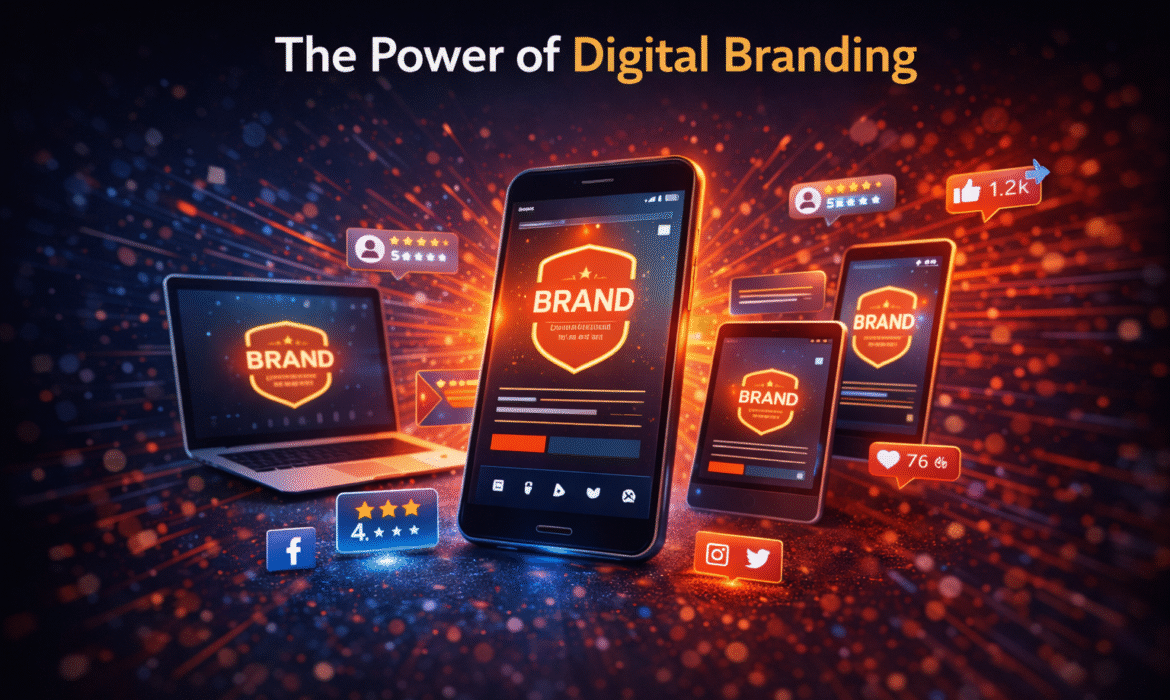
Digital branding has become vital because modern customers in competitive digital markets choose products from brands that they consider trustworthy. Digital branding becomes essential at this point. Businesses use strong digital branding to establish market differentiation while building trust with customers and developing enduring customer relationships.
Digital branding uses online platforms to develop a brand identity which organizations promote through their websites and social media platforms and search engines and email and digital advertisements. Your online business presence includes all elements that define your brand identity, at which customers will experience your brand messaging and tonal elements and visual design elements.
Online customers will select brands from whom they make purchases because they find multiple options to choose from. Strong digital branding establishes brand recognition which enables customers to form emotional attachments with the business. Customers who encounter identical branding elements throughout different platforms will experience increased trust in your business operations.
Your brand identity includes your logo, colors, fonts, and brand voice. The company establishes a unified corporate identity through consistent brand element application which runs throughout all its visual materials. The public will maintain brand recognition throughout time because of your established brand identity.
Digital branding requires content to operate successfully because content functions as its primary resource. Through digital channels which include blogs social media platforms and video content and emails your brand identity and professional expertise become visible to the public. Your brand establishes itself as an industry leader when you provide useful content which your audience can trust.
Your audience spends time at specific locations which should serve as the platforms for your brand. The active presence of your brand on Instagram and Facebook and LinkedIn and Google provides better visibility for your business. Your brand shows dedication to customers through its system of responding to all types of customer input.
Customer testimonials combined with case studies and reviews create powerful branding tools which establish market presence. Customers develop trustworthiness through positive feedback about products which they use to make purchasing decisions. Your brand’s reputation and credibility become stronger through the presentation of actual customer feedback.
Digital platforms require businesses to maintain consistent branding because this practice helps them achieve successful branding results. Your website content and social media posts should use a unified tone which reflects your brand identity. The establishment of consistent branding practices allows businesses to create a unified brand image which will improve their brand identity.
Digital tools enable companies to monitor their brand presence and audience development and customer interaction. Businesses use data analysis to discover their current brand perception and the areas that require development.
Digital branding establishes visual elements which create a consistent brand experience that customers can trust and remember. Businesses establish a powerful online brand through their identity work which develops their content production capabilities and customer interaction abilities and brand message delivery.
+91 8595269126, +91 7042231814 info@marketinggo.in
26B Third Floor, Desh Bandhu Gupta Rd, Block 26 B, Dev Nagar, Anand Parbat, Karol Bagh, New Delhi, Delhi 110005