

Contact Information
+91 8595269126, +91 7042231814 info@marketinggo.in

Address
26B Third Floor, Desh Bandhu Gupta Rd, Block 26 B, Dev Nagar, Anand Parbat, Karol Bagh, New Delhi, Delhi 110005

The online product marketing activities which companies conduct continuously throughout the day create difficulties for their customers. Customers need brand information which they can trust to deliver authentic product recommendations that meet their exact needs. The main digital marketing strategy which businesses use to attain sustainable development is content marketing. Content marketing delivers value to its target audience through its content which does not use any advertising methods.
Through content marketing businesses inform their customers about their products. Your informative content which you share through blogs and videos and social media posts and guides establishes your brand as a trustworthy source of information for customers. Customers develop trust in your brand which they use as a basis to decide whether to buy from you and how to maintain their relationship with your business.
Your business will achieve expert status in your industry through ongoing development of superior content. Customers begin to view your brand as an expert when they discover useful content on your website and social media platforms. Your organization obtains a competitive edge through this particular authority.
Content marketing and SEO work together. Search engines prioritize websites that deliver continuously updated valuable content which maintains relevant links to their target audience. Search engine rankings improve through well-written blogs that include appropriate keywords because they generate organic website traffic. The method creates permanent website traffic through automatic visitor acquisition which does not need paid promotion.
Good content keeps users engaged. Informative articles plus engaging videos plus useful tips create a positive experience which makes visitors stay longer on your website. Users who engage with your content will become more likely to return to your website and follow your brand on social media and share your content with others.
Content marketing attracts users who are genuinely interested in your products or services.When users access valuable content they tend to complete inquiry forms and subscribe to newsletters and contact your business. The leads obtained from this source present higher qualification levels which simplify the process of turning them into paying customers.
Content marketing costs businesses less than they would need to spend on traditional advertising methods. The creation of content generates permanent website traffic which continues to produce new leads after the content is published. The solution operates as a budget-friendly option which helps companies to achieve their future development targets.
Content creation serves as the fundamental component of content marketing which establishes relationships between businesses and their audience while building trust and authority. Businesses which produce valuable content on a regular basis will attract new customers and create lasting connections with their audience. Content marketing enables business growth by increasing website visitors and generating leads which leads to ongoing business expansion.
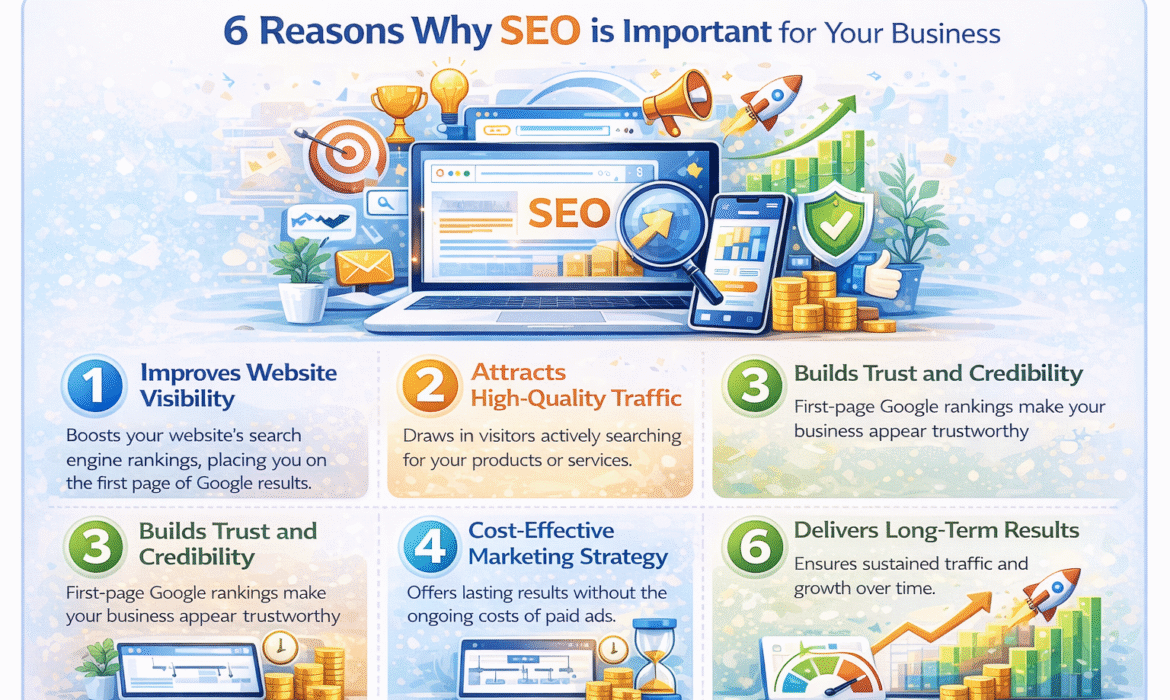
Organizations in the present digital-based environment need more than a website to create their online identity. The website needs to generate proper audience visibility which matches their peak viewing times. Businesses must use Search Engine Optimization (SEO) techniques to reach their target results. Through Search Engine Optimization SEO serves as the top digital marketing approach which helps companies develop their brand into a lasting business during their expansion period.
Your website will achieve better search engine rankings because SEO techniques will be implemented. The correct search engine optimization process results in a business achieving higher chances to appear on the first page of search engine results. The website gains more visibility which leads to increased click-through rates that produce additional site visitors who can potentially become paying customers.
SEO targets users who actively seek information about products or services while it differs from paid advertising. SEO generates relevant traffic to your website because it attracts visitors who match your target audience. Users increase their interaction with your content when they discover the exact information which they need.
Users perceive websites that rank first in search results as more trustworthy than other websites. Strong SEO practices which include quality content and fast website speed and mobile optimization and secure browsing create websites that establish their credibility. The trust which develops through time period leads users to select your business instead of competitors.
SEO stands as one of the most affordable digital marketing methods which businesses can use. The process demands both time dedication and ongoing workforce commitment yet it produces results which retain their worth for extended periods. Your website establishes its organic traffic stream through high search engine rankings which eliminate the need for continuous expense on paid advertising.
SEO involves more than keyword research because it aims to enhance complete user experience. Users experience better website rankings when websites combine proper structure with simple navigation and quick loading times and useful content. Visitors can find information more easily through these enhancements while they stay on your site longer.
SEO delivers permanent results because its traffic generation persists after paid advertisements discontinue operations. Businesses achieve permanent search engine ranking success when they continuously optimize their websites and create high-quality content. SEO provides long-term growth potential which makes it an effective business strategy.
Digital marketing practices for businesses require SEO as their essential component which enables them to achieve sustainable growth. The solution improves visibility while building trust and bringing in valuable visitors who deliver prolonged advantages. The digital market competition keeps rising which makes SEO investments necessary for businesses to establish a strong base that will drive their future success.
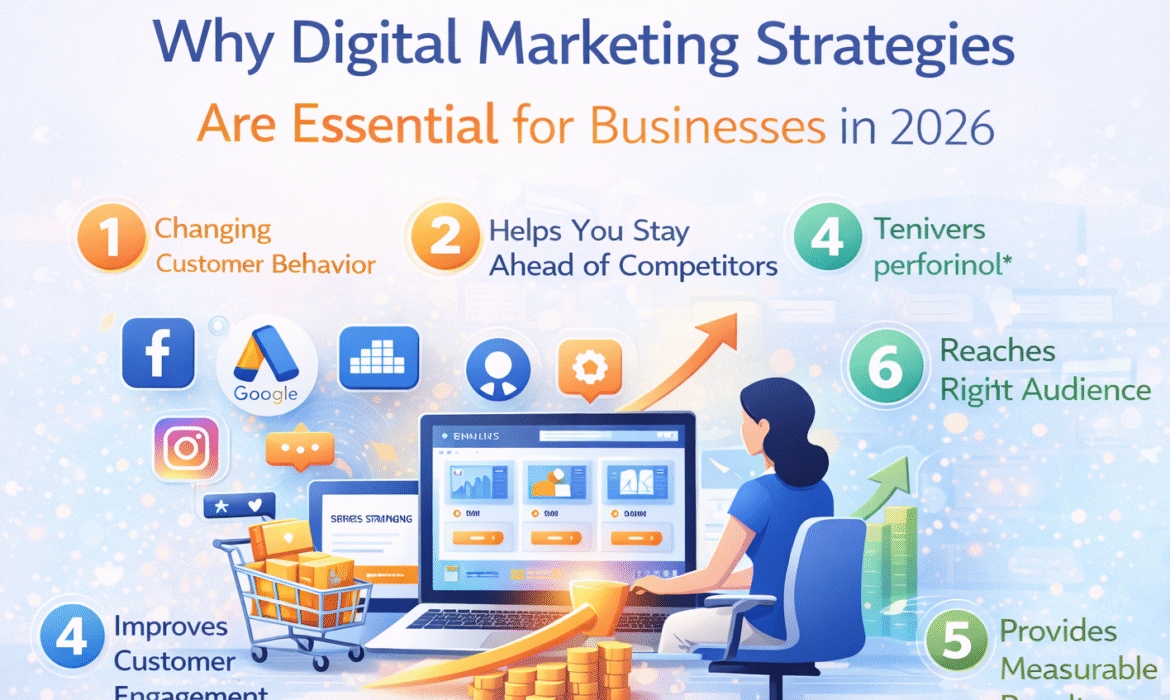
Customer behavior patterns undergo continuous transformation as customers search for products and interact with brands. In 2026, businesses require digital marketing strategies which exceed basic online presence to maintain their competitive edge and industry presence. Digital marketing functions as a critical component which enables both startup companies and established businesses to achieve sustainable growth.
Today’s customers rely heavily on the internet before making any purchase decision. Google serves as their search engine while they use social media to read reviews and compare different brands through online platforms. A business needs a strong digital marketing strategy which enables customer visibility throughout their entire journey starting from initial contact ending with their final purchase.
Digital marketing enables businesses to access more potential customers than they could through traditional marketing methods. Your brand achieves customer visibility through SEO and social media marketing and online advertising exactly when customers search for products or services which are related to your brand. Through constant visibility brand recognition develops into trustworthy reputations which companies establish over time.
Digital marketing has become a fundamental marketing approach that most businesses currently use. Your business will lose customers to online active competitors when your digital marketing strategy lacks proper organization. The digital marketing plan provides companies with two advantages which include competitor tracking and new market expansion opportunities.
5. Builds Long-Term Customer Relationships
Digital marketing serves two purposes which include selling products and developing customer connections. Businesses maintain contact with their target audience through their use of content marketing and email campaigns and social media engagement. Continuous communication allows businesses to establish their brand reputation while customers develop loyalty which leads to repeat purchases.
The preferences of customers and the trends of the market experience rapid changes. Marketers use digital marketing strategies to modify their marketing approach according to present results and new industry developments. Businesses can manage all emerging social media platforms and algorithm changes and shifts in consumer behavior without facing any significant interruptions.
Digital marketing will serve as the fundamental component for business development in 2026. A business requires a powerful digital marketing strategy which enables it to enhance its market presence while acquiring high-quality customers for sustainable business growth. The companies which implement intelligent data-based digital marketing solutions will emerge as market leaders in the future.
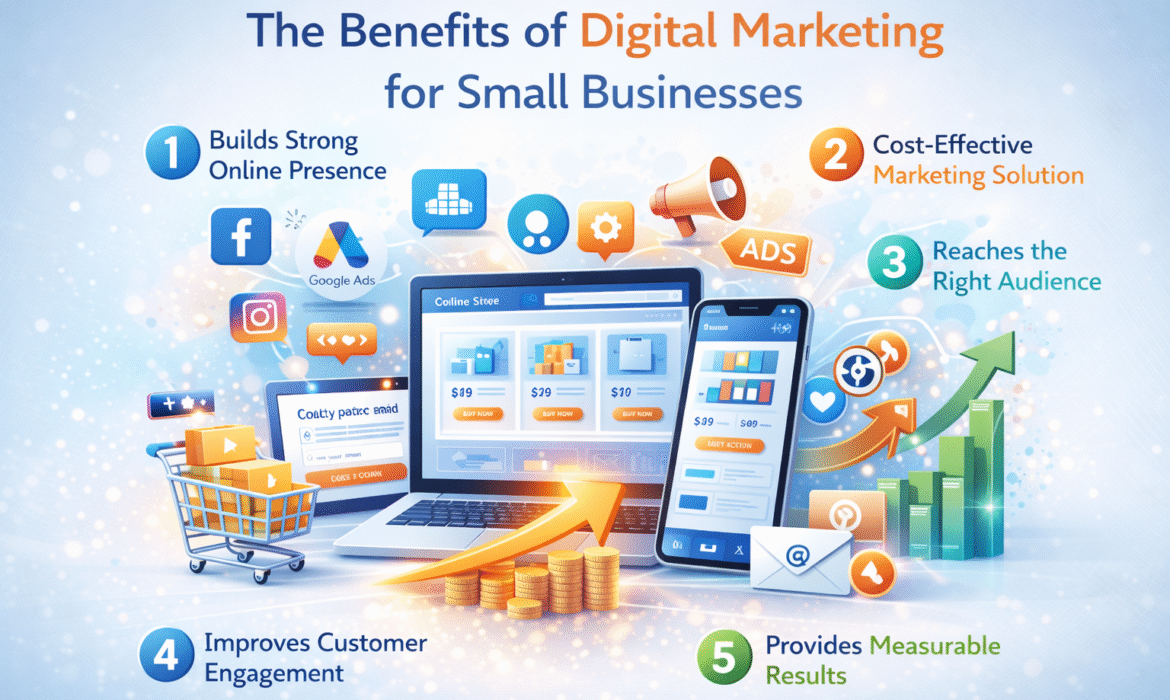
Small businesses in the present-day competitive environment need to use more than traditional marketing methods for marketing their products. Customers today prefer to spend their time online while searching for products and services and reading reviews before making their final choice. The implementation of digital marketing strategies serves as an essential resource which enables small businesses to achieve their expansion objectives.
Digital marketing establishes a powerful online presence which helps small businesses to develop their internet footprint. Through a professional website, search engine optimization (SEO), and social media platforms, businesses can easily reach their target audience. The appearance of your business in Google search results and social media feeds establishes credibility which potential customers will recognize.
Digital marketing offers affordable advertising solutions which cost less than traditional advertising methods that include newspapers hoardings and TV ads. Small businesses can start with a limited budget and still get measurable results. Businesses can achieve better returns on investment through social media marketing email marketing and Google Ads which enable them to manage their expenses while directing their efforts toward particular customer groups.
The main strength of digital marketing shows itself through its ability to target specific audience segments with high precision. Businesses can reach people based on their geographic location and their age and their personal interests and their online activities. Your marketing work displays your products to users who have actual interest in your business which raises your probability of making sales.
Digital platforms enable businesses to establish direct customer contact. Companies use social media platforms to handle audience interactions through comments and messages and reviews and emails. Active audience engagement creates strong customer bonds which lead to higher customer satisfaction and increased brand loyalty.
Small businesses can create excellent leads through their implementation of SEO and paid advertising and content marketing strategies. The combination of a properly optimized website and effective call-to-action elements motivates visitors to request information or register or complete their purchases. This process leads to an increase in sales and expansion of business operations.
Digital marketing provides businesses with precise data about their online performance while traditional marketing methods do not offer such capabilities. Businesses can monitor their website visitor numbers and advertising success and lead generation results and customer interaction patterns. The collected data enables organizations to develop their decision-making process while enhancing their marketing approach to achieve improved outcomes.
Digital marketing has become a necessary requirement for small businesses because they need it to succeed their operations. The process enables businesses to develop their online presence while bringing in additional customers and competing successfully against bigger companies. The appropriate digital marketing strategies enable small businesses to achieve permanent success and online presence and continuous business expansion in the current digital environment.
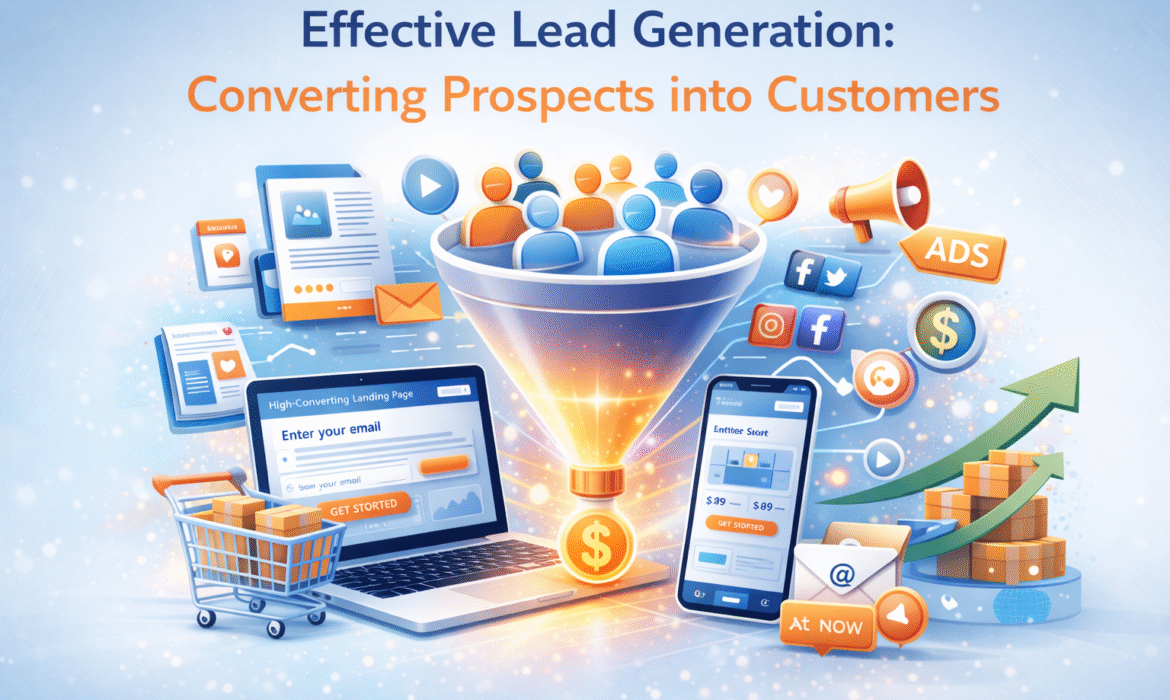
Your knowledge base covers information up to the month of October in the year 2023. The digital marketing process exists to create leads which businesses require to establish operational activities.Your business generates leads from potential customers who show interest in your products or services. The lead generation strategy allows businesses to connect with their desired customers while they obtain essential data which will assist them in acquiring new customers.
Lead generation involves the process of attracting potential customers while businesses gather their contact information which includes phone numbers and email addresses and customer inquiries. The process occurs through multiple online platforms which include websites and landing pages and social media and advertisements and content marketing. The organization seeks to develop a database which consists of potential customers who have shown interest in their business.
Lead generation operates as an essential business process because companies need customer contacts to support their business expansion initiatives. Businesses receive continuous lead generation results which enable their sales staff to pursue relationships with potential customers who have already indicated interest.
The success of lead generation depends on landing pages which need to operate as the essential requirement. The primary title of a landing page must present its main value to users through a basic contact form and an obvious contact button.
The content marketing strategies that businesses execute through their content resources enable them to obtain new leads. Businesses can use their blogs and guides together with their ebooks and videos to connect with users who want to solve their difficulties. Customers will trust businesses which create useful content for their needs because this Trust leads to customers sharing their contact details. Your business can use educational material distribution to demonstrate its field expertise through its educational content.
Through social media platforms businesses can create direct connections with their target audience. The customer interest collection process begins when businesses create posts and stories and reels and lead forms. Businesses use paid social media ads to reach more people because they want to show their content to specific audience groups which leads to increased lead generation success.
The advertising capabilities of Google Ads and social media ads enable businesses to create leads for their organizations through advertising. The combination of high-intent keyword selection and audience targeting in advertising operations enables businesses to generate leads at a faster pace. The combination of optimized ads together with landing pages enhances both cost per lead and return on investment.
Lead conversion does not occur immediately after initial contact. Businesses use follow-up emails together with messages and remarketing campaigns to maintain lead engagement throughout the sales process. Your brand achieves better visibility through ongoing communication which increases the likelihood of successful conversions.
The process of tracking lead sources together with conversion rates and cost per lead provides organizations with better ways to develop their marketing strategies. Data-driven optimization creates improved results together with ongoing development throughout time.
Lead generation serves as the essential foundation that enables businesses to expand their operations. Businesses can use landing pages together with content marketing and social media and paid ads to generate high-quality leads which they can convert into paying customers. A well-planned lead generation strategy ensures consistent sales and long-term success.
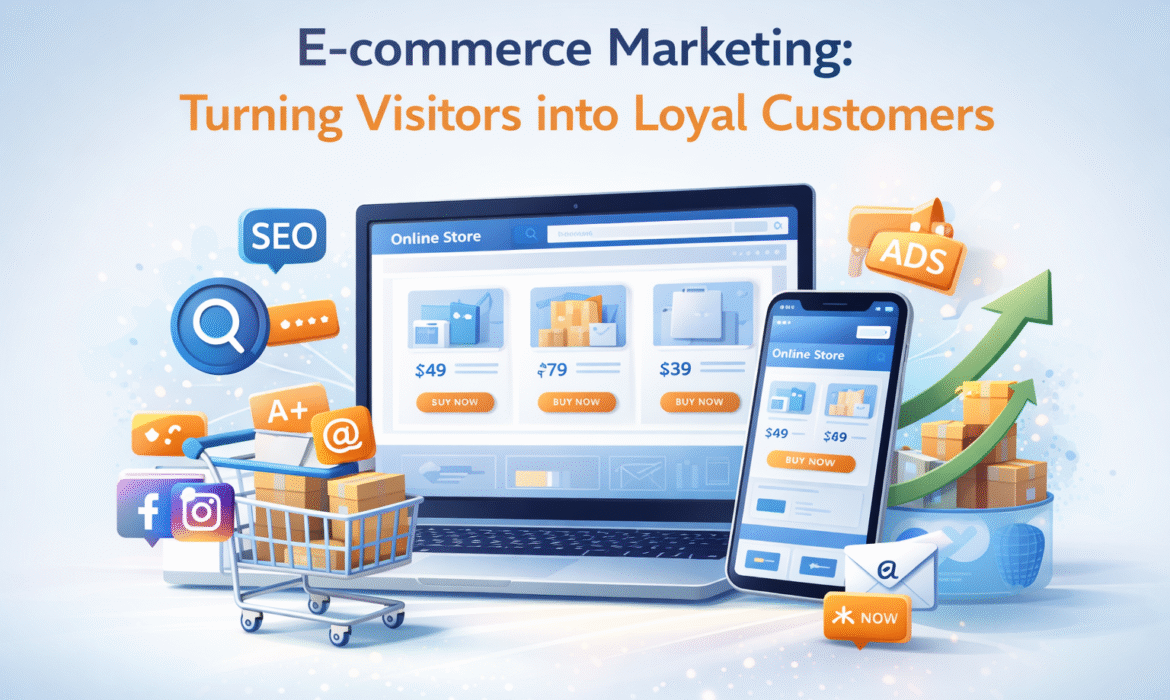
The existing competition in the market creates challenges which e-commerce companies must overcome to reach their growth targets. Online stores need to complete their initial operating timeframe before they can begin to earn stable financial returns. All business activities inside a company depend on e-commerce marketing because it operates as a critical business function. Business organizations require a strong e-commerce marketing plan which will help them draw in suitable customers who will buy products and establish enduring customer relations.
E-commerce marketing establishes an online advertising system which uses digital marketing methods to promote online stores together with their merchandise. The approach includes SEO and paid advertising and social media outreach and email distribution and content creation and remarketing efforts. The project aims to produce site traffic which will turn into customers who will return for future purchases.
Attracting appropriate site visitors constitutes a fundamental need for e-commerce websites which require efficient strategies to acquire customers that will help them achieve their business outcomes. Your product pages will achieve better Google rankings through SEO while paid advertisements deliver immediate traffic from users conducting product research. People use social media platforms to find new products and brands.
Product pages serve as the basic operational components which enable an e-commerce website to function properly. The product information which provides clear descriptions together with high-quality images and videos and pricing and customer reviews enables customers to build trust. The combination of a seamless checkout experience together with rapid website performance results in decreased cart abandonment rates and higher conversion rates.
Companies utilize Instagram and Facebook social media platforms for their online store marketing initiatives. The businesses use product posts which they combine with reels and influencer partnerships and shoppable features to build customer engagement while reaching their target audience. The existing social proof together with user-generated content increases the credibility of the source.
The most effective tool for driving e-commerce business growth stands as email marketing. The system uses abandoned cart emails together with product recommendations and order updates and special offers to bring customers back to the website. Existing customers who return to make purchases generate higher revenue than customers who make their first purchase.
Many people who visit an e-commerce website end up leaving the site without making a purchase. The ads for remarketing purposes show users the products they previously viewed to persuade them to finish their purchase. The strategy produces better conversion results together with increased return on investment.
E-commerce marketing success requires data analysis to determine effective strategies. The businesses achieve their best performance results by monitoring sales outcomes together with their traffic sources and conversion rates and customer behavior. Successful optimization processes lead to improved results which create ongoing business development.
E-commerce marketing serves as the fundamental method which helps businesses achieve online sales growth while developing customer loyalty. Businesses can establish an effective sales funnel through the combination of SEO with paid advertisements and social media and email marketing and remarketing. A brand can achieve faster growth through a well-designed e-commerce marketing strategy which helps them compete effectively in digital markets.
Digital branding has become vital because modern customers in competitive digital markets choose products from brands that they consider trustworthy. Digital branding becomes essential at this point. Businesses use strong digital branding to establish market differentiation while building trust with customers and developing enduring customer relationships.
Digital branding uses online platforms to develop a brand identity which organizations promote through their websites and social media platforms and search engines and email and digital advertisements. Your online business presence includes all elements that define your brand identity, at which customers will experience your brand messaging and tonal elements and visual design elements.
Online customers will select brands from whom they make purchases because they find multiple options to choose from. Strong digital branding establishes brand recognition which enables customers to form emotional attachments with the business. Customers who encounter identical branding elements throughout different platforms will experience increased trust in your business operations.
Your brand identity includes your logo, colors, fonts, and brand voice. The company establishes a unified corporate identity through consistent brand element application which runs throughout all its visual materials. The public will maintain brand recognition throughout time because of your established brand identity.
Digital branding requires content to operate successfully because content functions as its primary resource. Through digital channels which include blogs social media platforms and video content and emails your brand identity and professional expertise become visible to the public. Your brand establishes itself as an industry leader when you provide useful content which your audience can trust.
Your audience spends time at specific locations which should serve as the platforms for your brand. The active presence of your brand on Instagram and Facebook and LinkedIn and Google provides better visibility for your business. Your brand shows dedication to customers through its system of responding to all types of customer input.
Customer testimonials combined with case studies and reviews create powerful branding tools which establish market presence. Customers develop trustworthiness through positive feedback about products which they use to make purchasing decisions. Your brand’s reputation and credibility become stronger through the presentation of actual customer feedback.
Digital platforms require businesses to maintain consistent branding because this practice helps them achieve successful branding results. Your website content and social media posts should use a unified tone which reflects your brand identity. The establishment of consistent branding practices allows businesses to create a unified brand image which will improve their brand identity.
Digital tools enable companies to monitor their brand presence and audience development and customer interaction. Businesses use data analysis to discover their current brand perception and the areas that require development.
Digital branding establishes visual elements which create a consistent brand experience that customers can trust and remember. Businesses establish a powerful online brand through their identity work which develops their content production capabilities and customer interaction abilities and brand message delivery.
Artificial Intelligence (AI) is leading the way in transforming experiences in digital marketing and its influence on overall business strategies has to be considered. The utilization of AI tools for marketing has become a sure shot way for companies to acquire a strong competitive advantage even in this time of cutthroat competition.
AI in marketing refers to theautomatic use of the advanced technology that can analyze the data, make predictions, and automate the marketing processes. The AI systems can track the customers’ behaviors, optimize the content, and do the rest without human involvement.
AI technology examines vast amounts of data and consequently learns more about the customer’s preferences and dislikes, as well as the manner of his/her online interactions. Such knowledge helps communities create more appropriate and personalized marketing tactics. The higher the consumers’ interaction and the more the conversions the sales due to the fact that the consumers can now see the content that matches their needs exactly.
One of the major benefits that comes with the application of AI is that it allows for personalization. AI-based tools can customize emails, web pages, suggest products, and even generate ads for every single user. Such a level of personalization was almost impossible to achieve through manual efforts, but it is now kind of everywhere thanks to AI.
The AI system doesn’t just analyze the bids; it alters them, keeps the right audience around, and searches for the best keywords for the campaign. The whole process, therefore, not only leads to the elimination of non-revenue-generating ad spending but also to the maximization of ROI.
AI is responsible for conducting tedious tasks like scheduling emails, answering through chatbots, and lead scoring. It is a fact that the customer support provided by chatbots is instantaneous, but the automated workflows still ensure that no customer is ignored. This service takes less time, and the marketing department can then redirect its resources to strategy and creativity.
AI plays a crucial role in the identification of the trending topics, the planning of content, and even the keyword research as well as performance analysis. Furthermore, AI makes the content search engine friendly through its other optimization techniques. Consequently, the entire content marketing process becomes more effective and also data-driven.
AI accurately processes and predicts historical data. On the basis of this forecasting, companies can effortlessly spot trends, have a thorough understanding of customer journey, and select the best marketing strategy to adopt.
AI is the factor, which is transforming digital marketing by making it more personalized, efficient, and results-based area. It is possible for the companies to use AI-generated methods as instruments that not only help in creating a better customer experience but also in making the campaign process simpler and getting larger profits quicker. As technology advances, AI will continue to be a powerful force in the digital marketing arena and its footprints will be seen in this field for years to come.
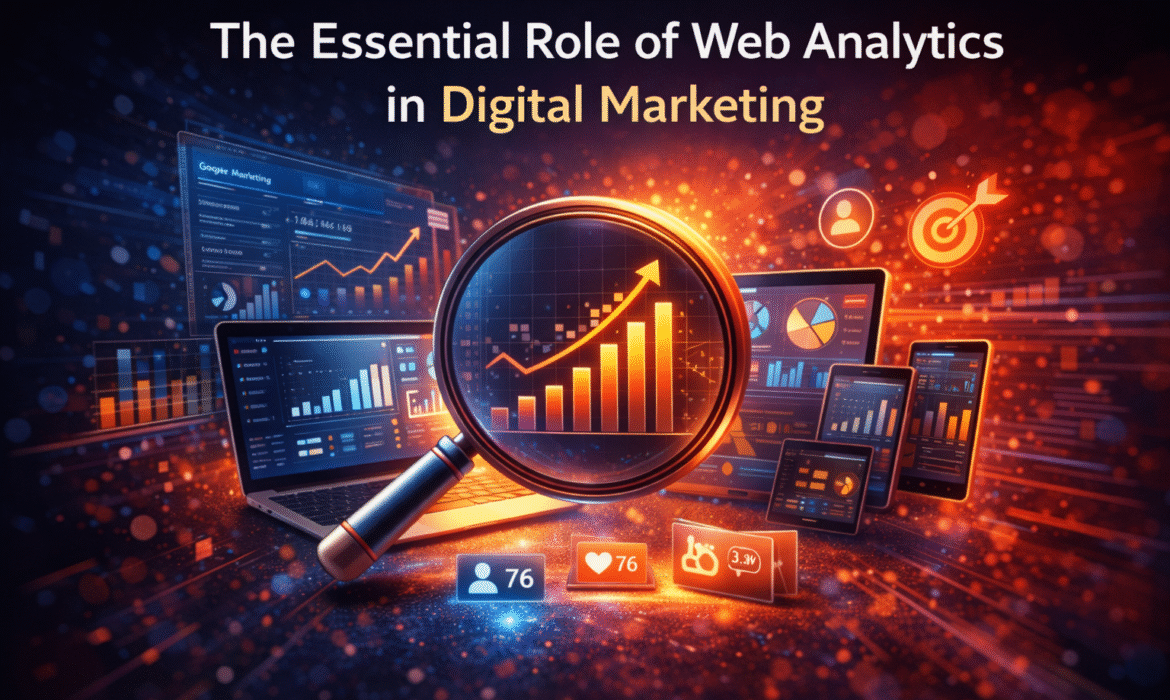
Data is the king in the fight for supremacy in digital marketing. Hence, web analytics is a great ally in this regard. With the help of web analytics, companies not only get a clear picture of the users’ activities on their website, but also through their advertising campaigns, then they make more intelligent and data-driven decisions which eventually result in more effective outcomes.
Web analytics encompasses the activities of the collection, measuring, and interpretation of the information associated with the web. It illustrates the process of how site visitors discover your site, which parts they visit, how long they remain there, and what their next actions are. Google Analytics is one of the tools that provide quite an assistance to businesses when it comes to measuring their performance and having clarity around their users’ activities.
Without data analysis, companies would not know at all what is working and what is not. The web analytics gives very precise statistics about the number of users from different sources, the traffic, and the rate of sales conversions. The companies will be then in a position to tweak their promotions, eliminate the cost that does not bring any return, and focus on the profitable ones.
Web analytics is one of the most powerful tools available to marketers, as it allows them to know their audience in terms of the geographical area, the type of device being used, the interests, and the behavior of the customers. One of the greatest benefits of knowing the demographic profile of your website visitors is that it could help with the segmentation of the market and consequently the targeting, which in turn would lead to less time and effort spent on content, advertising, and user-friendly interactions.
Analytics play a crucial role in tracking and recording all the digital marketing activities of the company. The company now has the ability to identify which campaigns are the biggest traffic drivers, lead contributors, and money makers. This will consequently give the marketers a chance to invest in the well-performing channel more while also working on the lesser performing one to uplift its performance.
Analytics indicates the way visitors are using your website. A bouncing visitor, a user staying briefly on the page, and the pages where users are leaving are just some of the signs pointing to either the website being poorly designed or not providing content worth reading. People may notice this data-oriented aspect and make gradual improvements in the areas of layout, content, and navigation. Visitors will then have a superior experience and a higher number of them will be turned into customers.
Web analytics is a situation in which businesses are always checking the progress of their goals, for instance, a certain number of potential customers through filled forms, calls, purchases, or sign-ups. The measuring of conversions provides an opportunity to evaluate ROI and understand how much digital marketing has actually impacted.
Predicting was the only way companies could rely on in the past; now they can base their decisions on real data. All the adjustments made to the landing page, shifting the ad budget, or quality of the content will be supported by analytics thus making the whole process of decision-making evidence-based.
To sum up, web analytics is the most important part of good digital marketing. It allows for a good understanding of the customers, performance measuring, and strategical optimization for the best growth. Data usage plays a key role in conversion, ROI, and long-lasting digital success improvements.

A customer is not the first thought that pops up in everyone’s mind when they visit your website. However, it is true that most of the visitors do nothing and just bounce off the site. If you lose the connection with the customer in this case, it will only lead you back to remarketing as a digital marketing strategy. With the implementation of this, the customer’s interests will be triggered once again and their comeback with the purchase will also be facilitated.
In simple terms remarketing, it is a method where a company can re-target the users who have visited their website, app users or people who have interacted with their social media posts. The ads will be out at the top of all communication channels like Google, Facebook, Instagram and YouTube so that the users just cannot escape the brand or the products in their minds.
Many customers would like to see the product a couple of times before they make the final decision to buy it. Remarketing keeps our brand on the top list and makes it the first one to come up in the customers’ minds. The more ads the users see, the more they subconsciously trust and recognize your brand, thus, they become more likely to take an action.
The primary goal of remarketing is to focus on people who already have a strong and clear opinion about your business. Since these people have already shown interest, they are far more chances turning into customers than the fresh ones. Hence, remarketing not only proves to be a powerful but also a cost-effective form of advertising when compared to many others.
Remarketing, in fact, allows the advertiser to reach the customer in different ways, the most significant being personalization. Advertising can be so well-managed that it indeed mirrors the buyer’s behavior. For instance, if a customer has accessed the page of a certain product, he will get the advertisements for that product. The first step in advertising is to make it personalized and that it will not only attract more customers but also result in more sales.
Remarketing is the primary factor that leads to the recovery of lost sales. Many customers may either not check out or just leave their forms incomplete. Visitors who see the ads will be the ones who are reminded or pushed a little to come back and either complete their purchase or ask a question, thus, more conversions.
Remarketing will definitely be less costly than traditional advertisements throughout its entire life cycle because the target market will be the same although in smaller numbers. A smaller number of ads being targeted does not mean a smaller ROI for the businesses; on the contrary, the improved targeting and higher conversion rates that come with it produce the overall larger ROI.
The power of remarketing is greatly increased when it is used together with other campaigns such as SEO, social media marketing, and conversion-optimized landing pages. Different marketing methods do not only coexist but also support and enhance one another, thus forming an entire digital marketing funnel.
Remarketing is an effective but expensive way to attract people who have left the website back and to change their interest to action. By using personalized ads and targeting users with a high purchase intent, businesses can achieve more conversions, better ROI, and more sales. If done correctly, remarketing will turn out to be a significant digital marketing growth driver.
+91 8595269126, +91 7042231814 info@marketinggo.in
26B Third Floor, Desh Bandhu Gupta Rd, Block 26 B, Dev Nagar, Anand Parbat, Karol Bagh, New Delhi, Delhi 110005